This post is also available in:
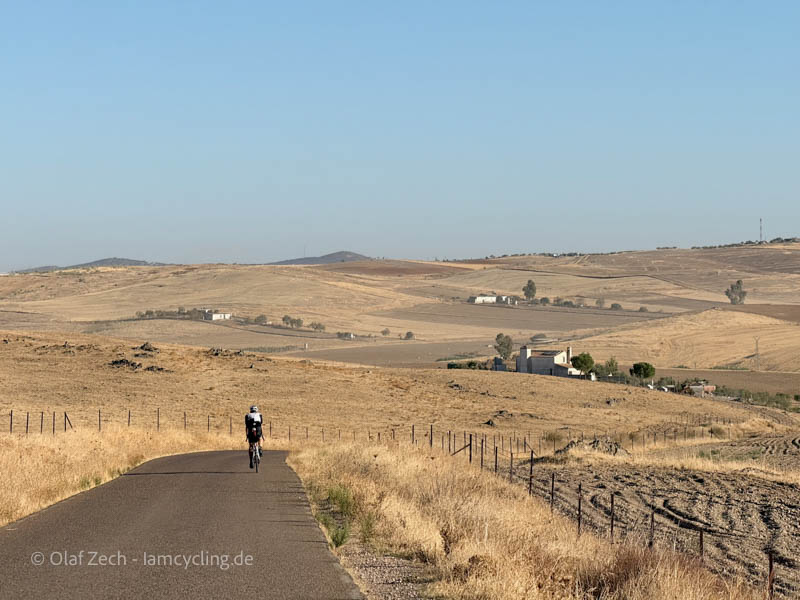
BikePacking Ruto Suroeste in Spain and Portugal as the highlight to wrap up the season. Two weeks of cycling to and from Seville with my Pedal Pal Jörg. The route was nearly 1,600 kilometers long, which we covered in 14 stages.
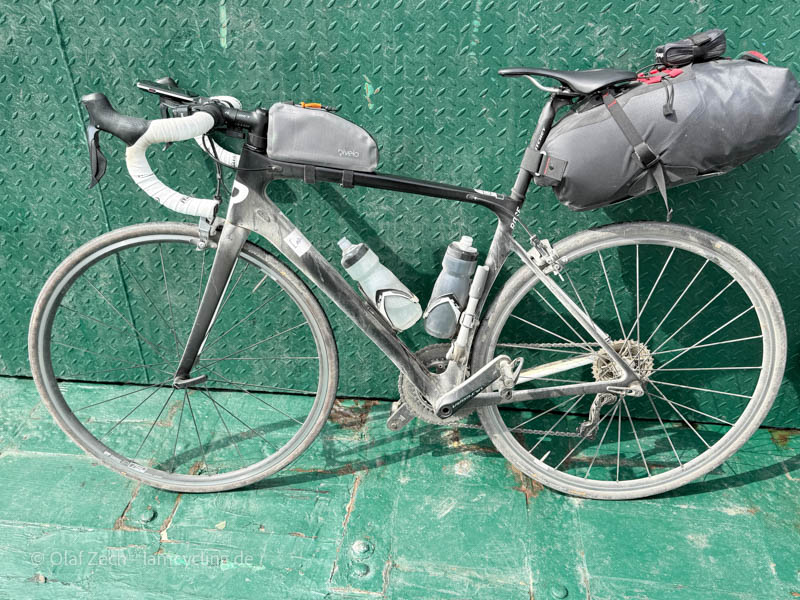
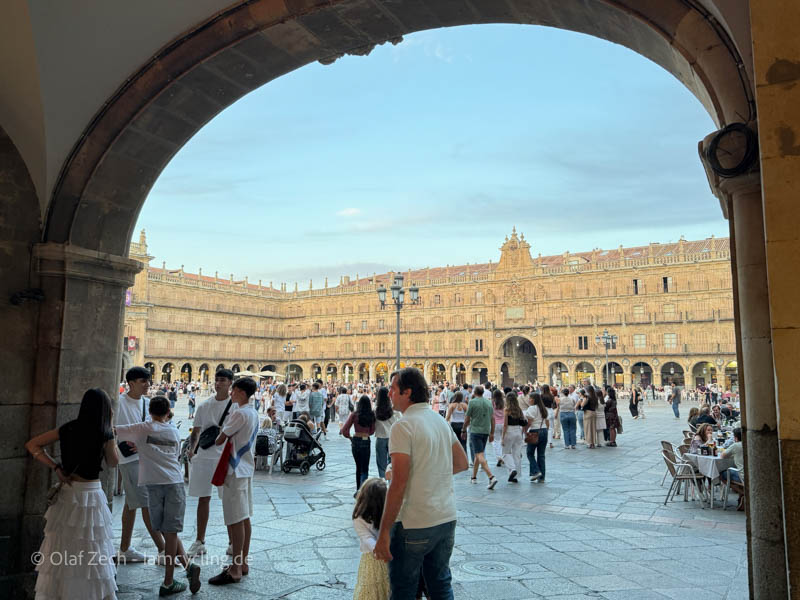
After our trip together in Tuscany in 2025, we traveled to the southwest of the Iberian Peninsula in 2026. I had high expectations for the route of the bikepacking tour in the southeast of the Iberian Peninsula. The route took us through areas you rarely get to visit—and that were largely unknown to me as well. But that was precisely what made it so appealing. Still, there were a number of well-known cities along the way.
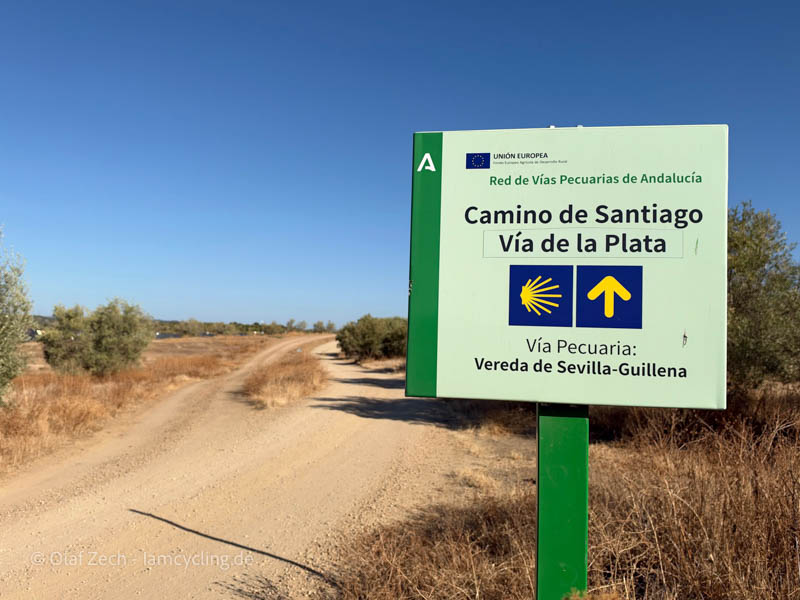
The basic idea
Our original plan was to ride the Ruta de la Plata from Seville and extend it all the way to Santiago de Compostela. However, I felt the risk was too great—flying south in the fall only to end up cycling in the rain and cold anyway.

The stages in detail at Komoot.
Through Extremadura to Salamanca and on to Porto
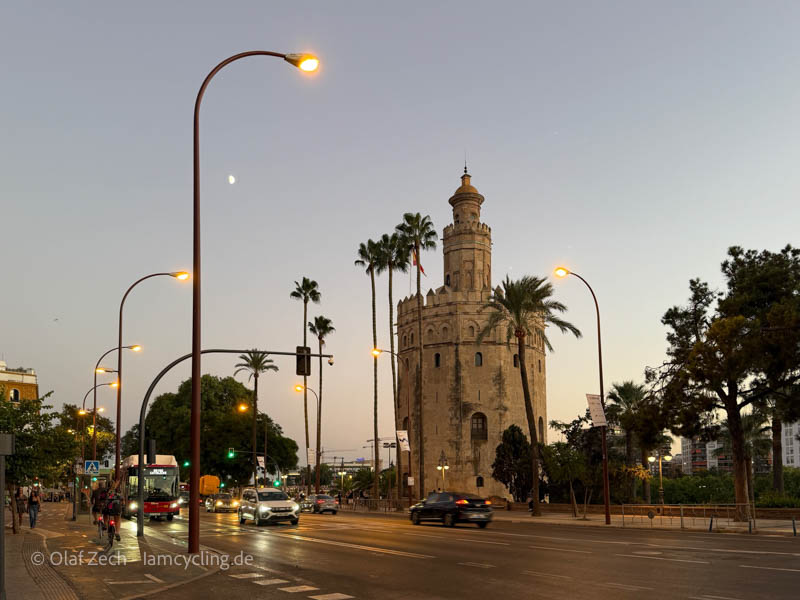
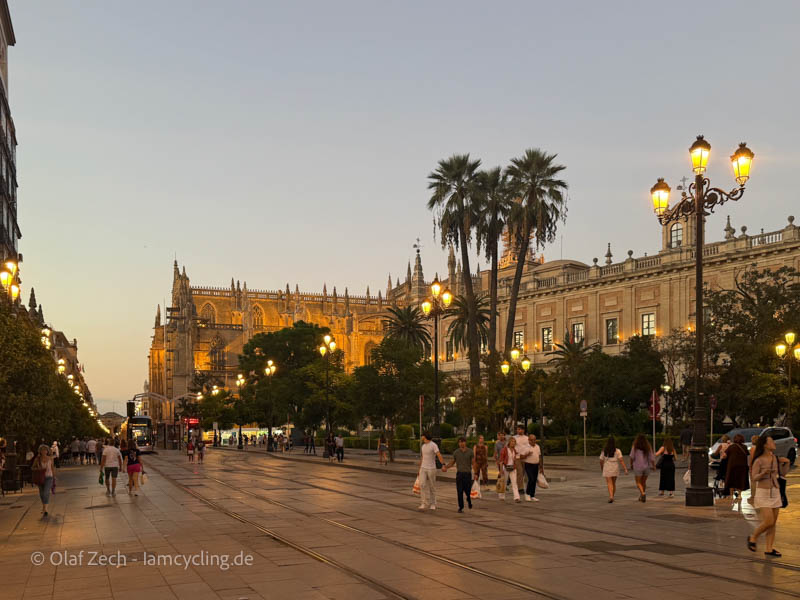
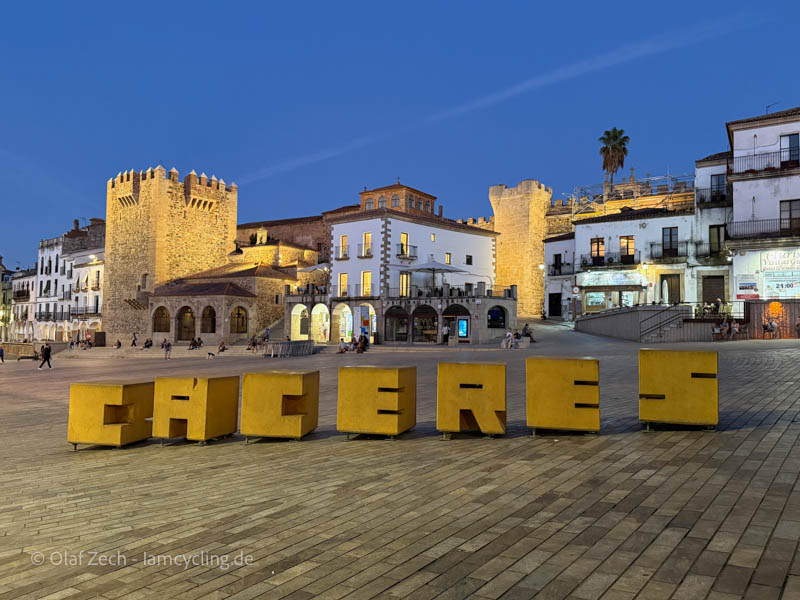
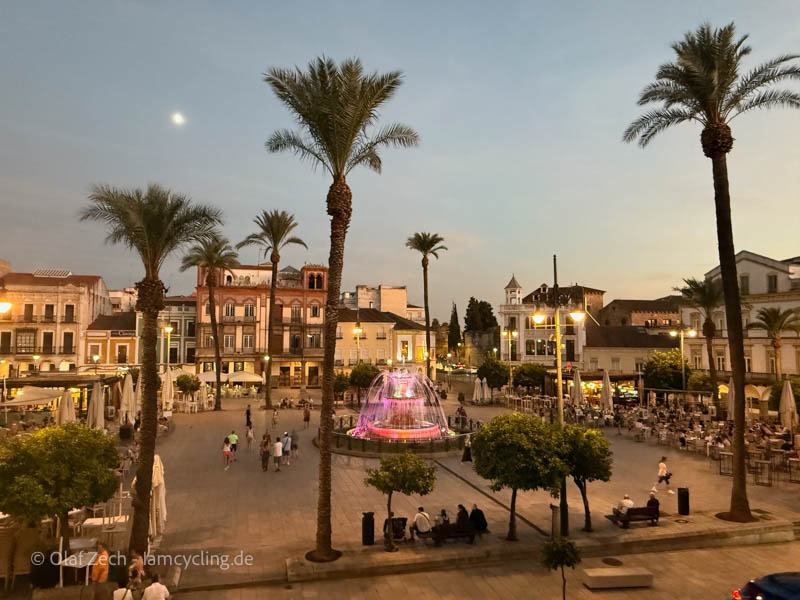
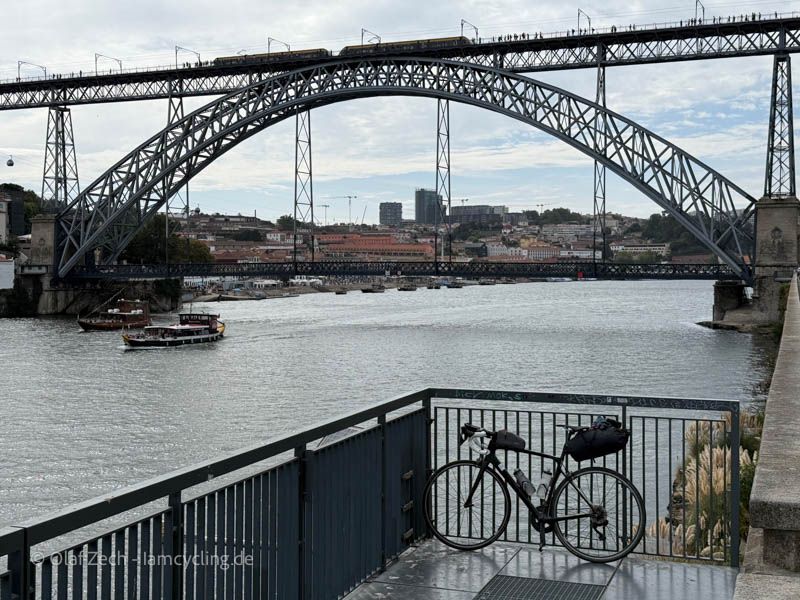
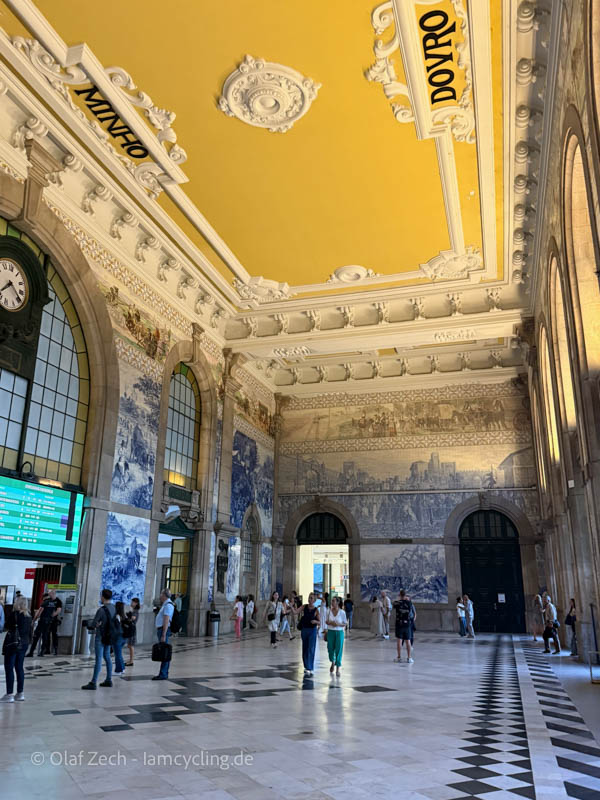
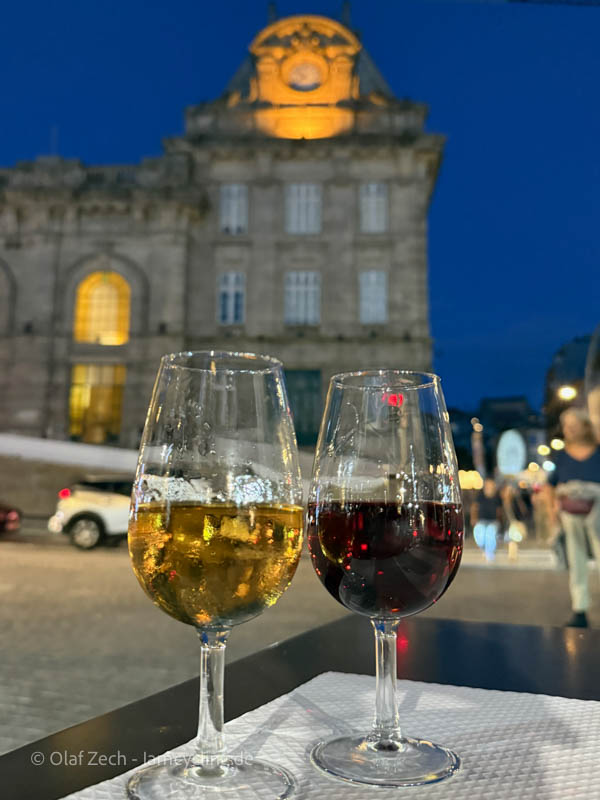
So we started the tour in Seville and followed the Ruta de la Plata only as far as Salamanca. The stops along the way to Salamanca were Monesterio, Mérida, Cáceres, and Plasencia. In Salamanca, we turned west towards Porto. The stops along the way to Porto were Freixo de Espada and Peso da Régua.


On the train to Lisbon
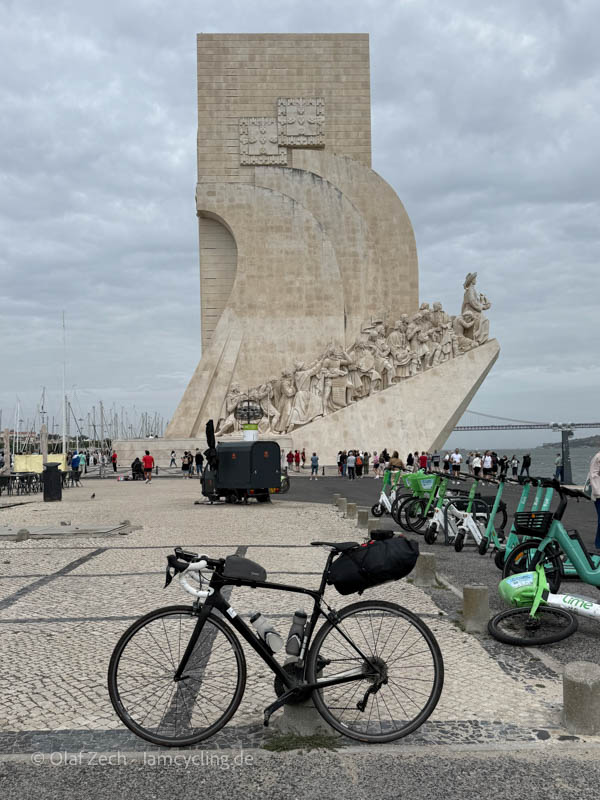
To be able to complete the full loop, we took the train for the stretch between Porto and Lisbon. On the Intercidades trains, you can bring your bike on board even without a bike box—you just have to make a reservation in advance. The day of the train ride was also our rest day.


Back to Seville via Évora and Huelva
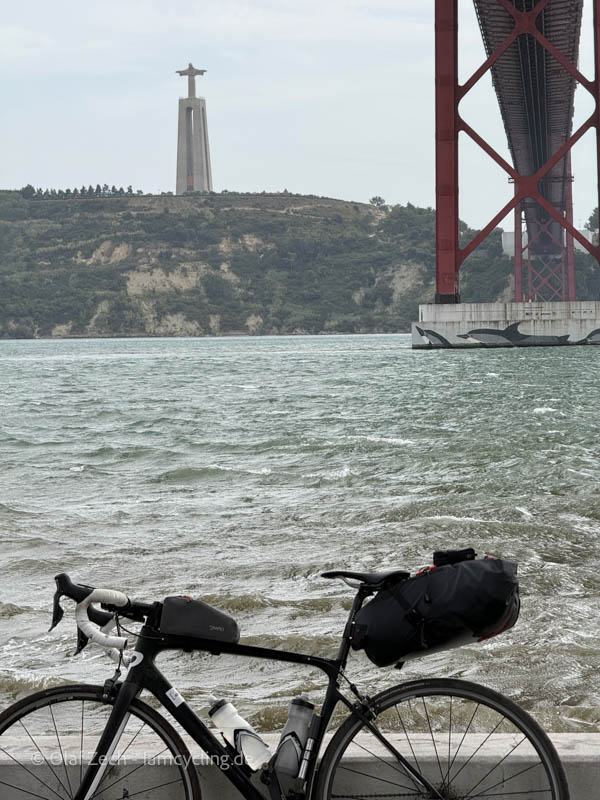
From Lisbon, the route headed east into the Alentejo region towards Évora. Mértola was another stop along the way south toward Faro.
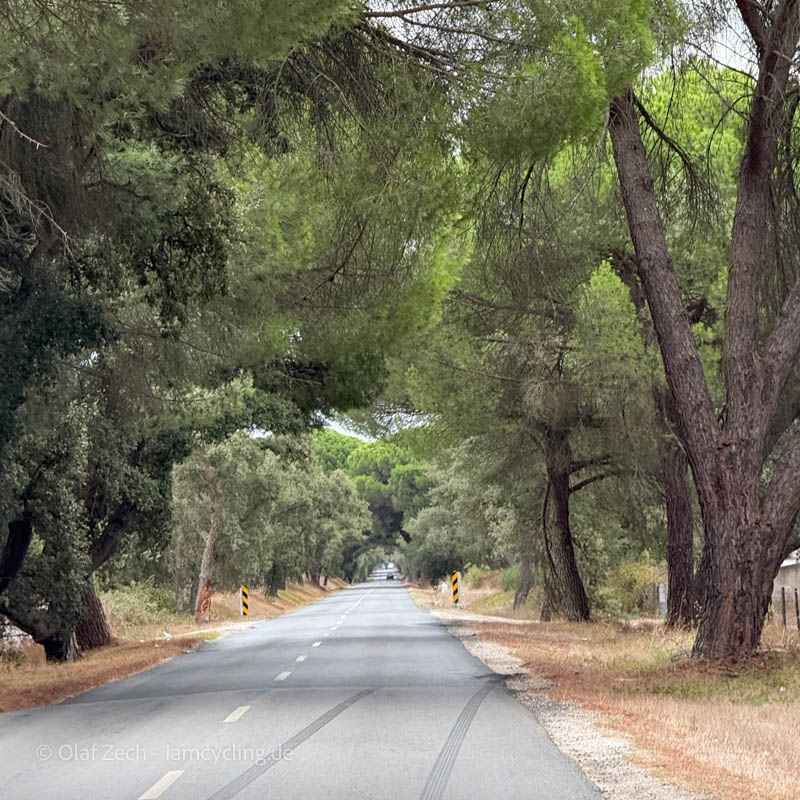
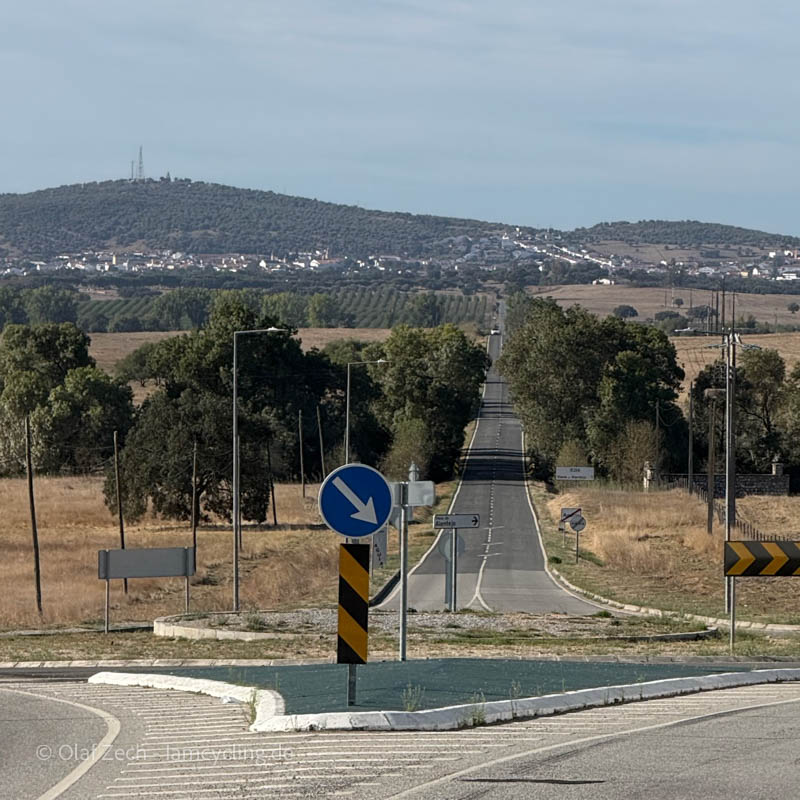
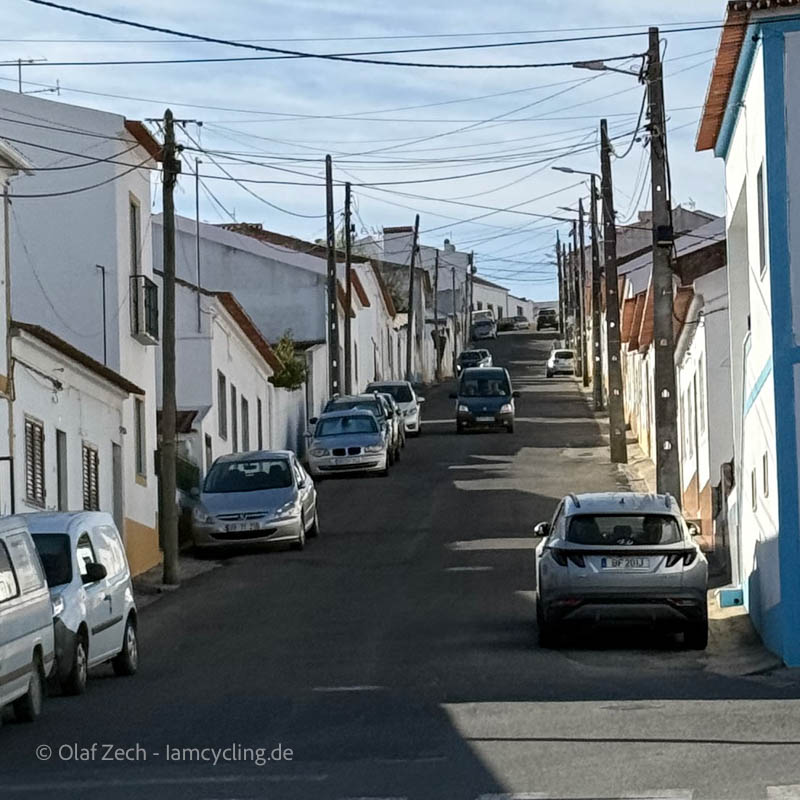
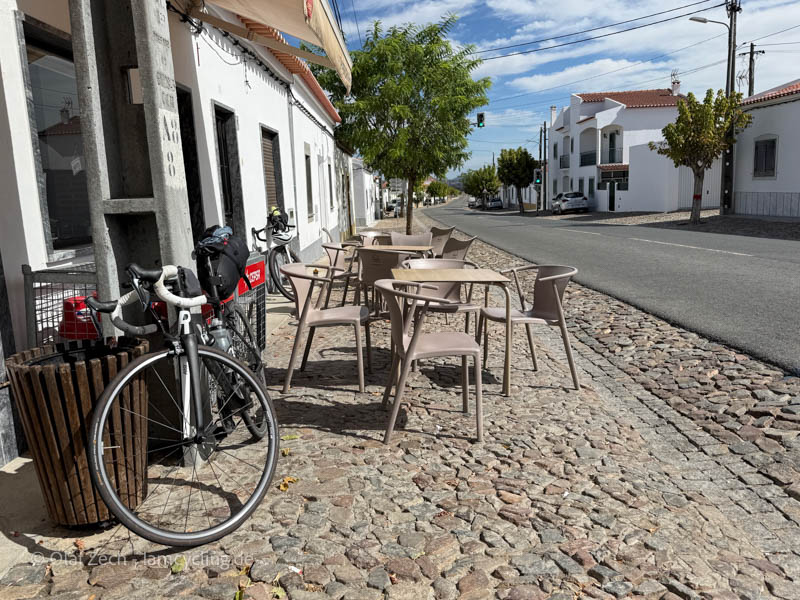
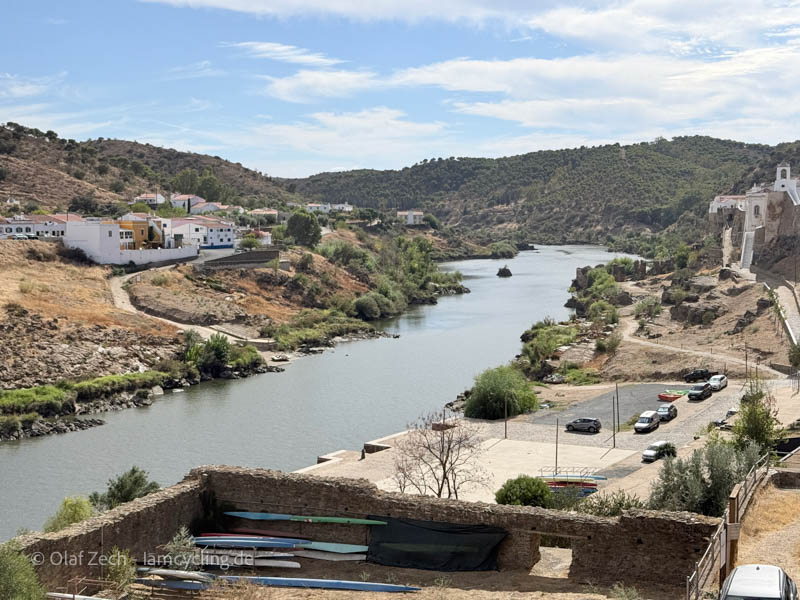
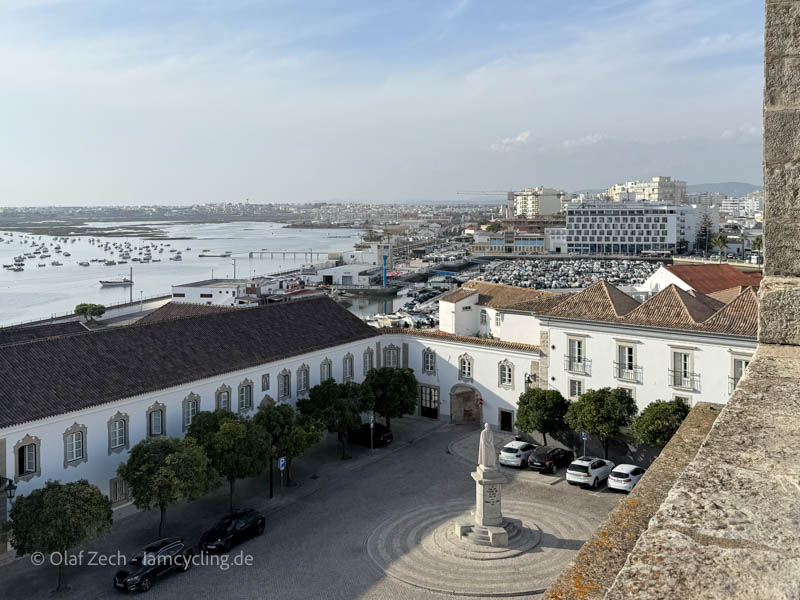
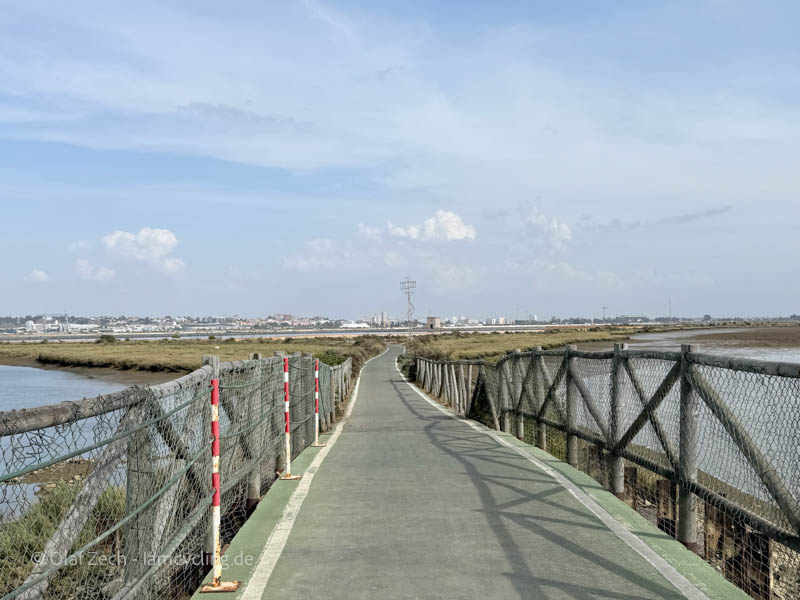
From Faro, we continued eastward and returned to Seville via Huelva. With the help of AI, we named our bike-packing tour “Ruta Suroeste.”

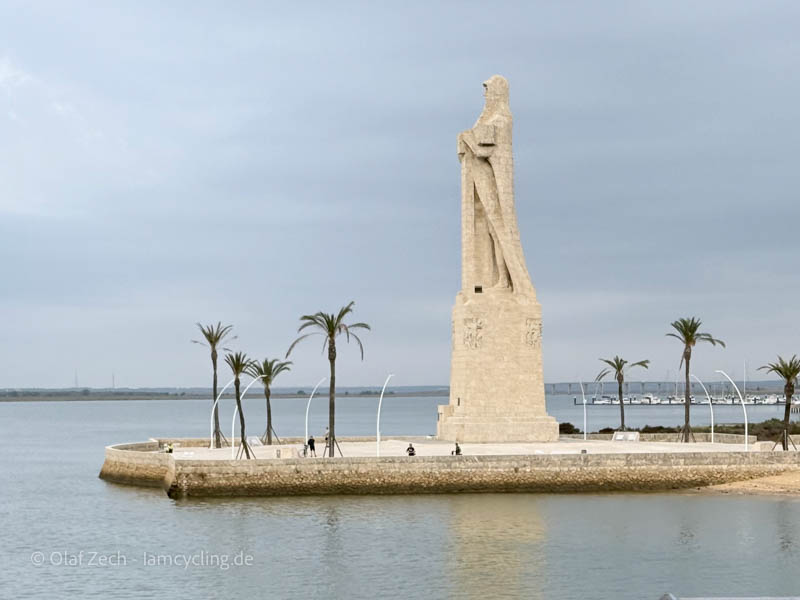
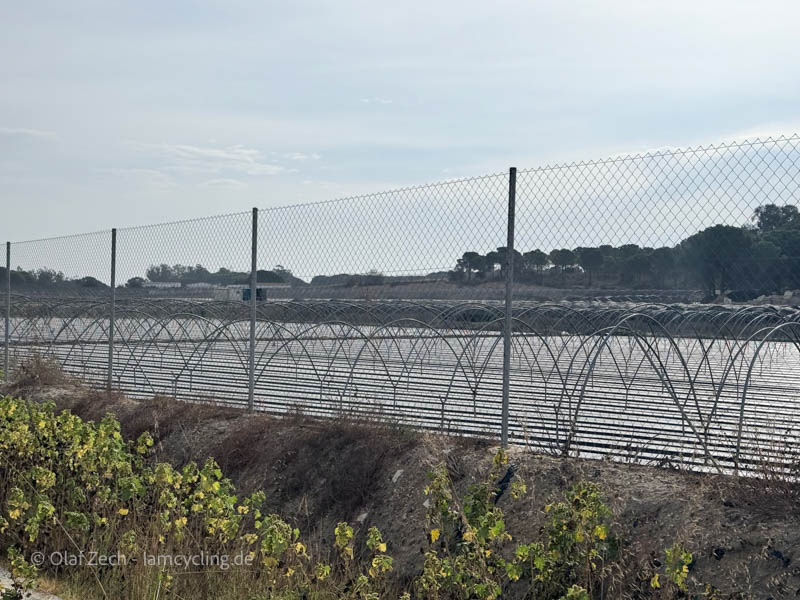
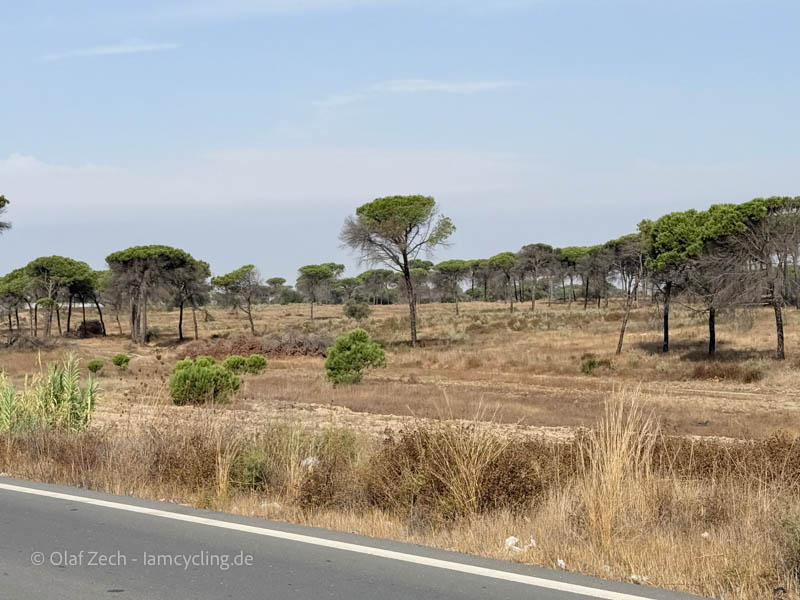
A Special and Somewhat Different Tour
Before the tour, I was really excited to see what the lesser-known areas of Spain and Portugal would be like. After the tour, I realized it was less spectacular than I had imagined. I can’t even name a single stage that stood out as the best. Still, the tour was special. It makes its impression as a whole.
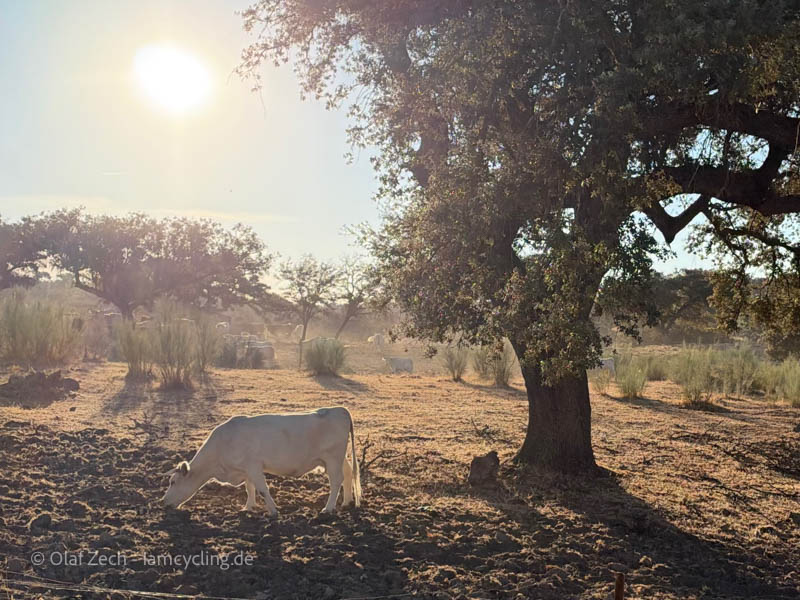
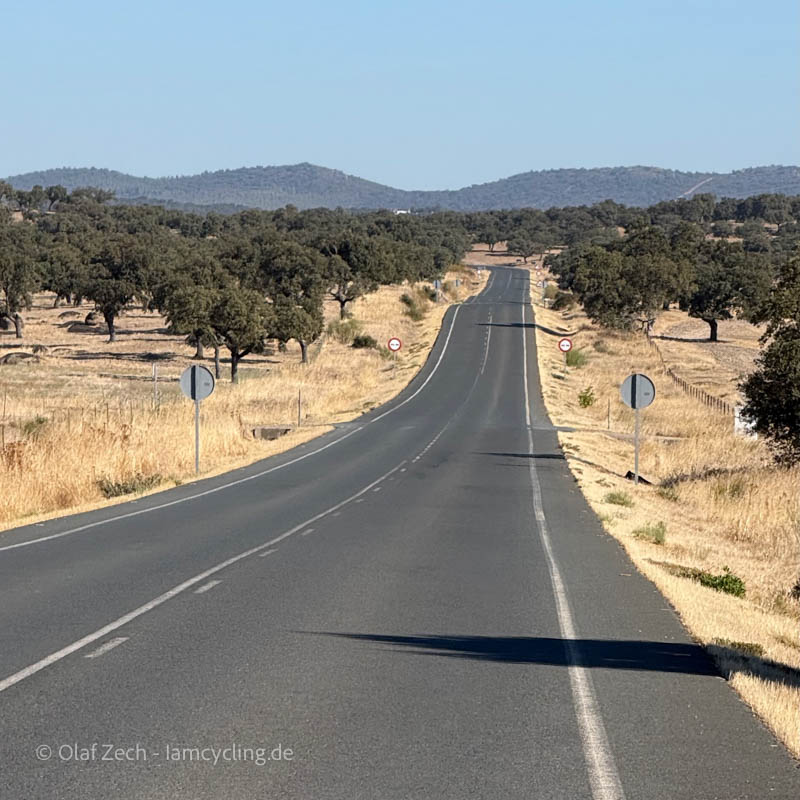
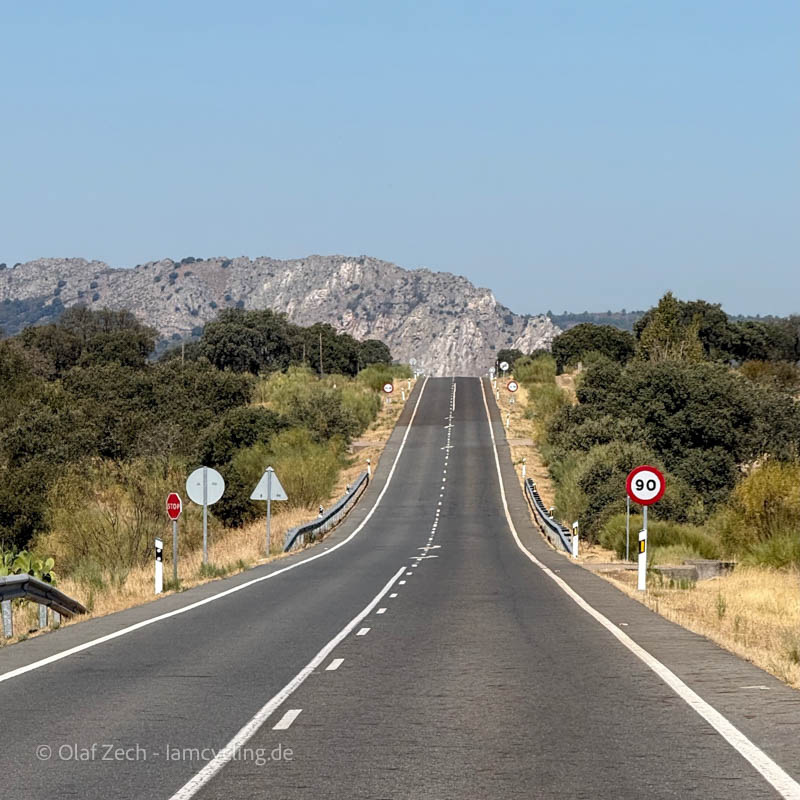
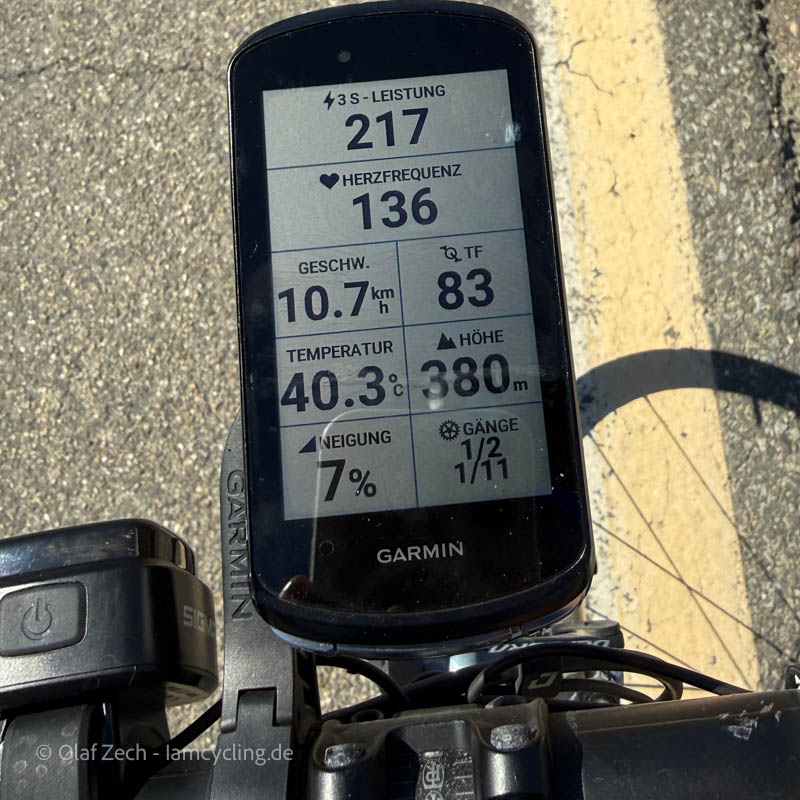
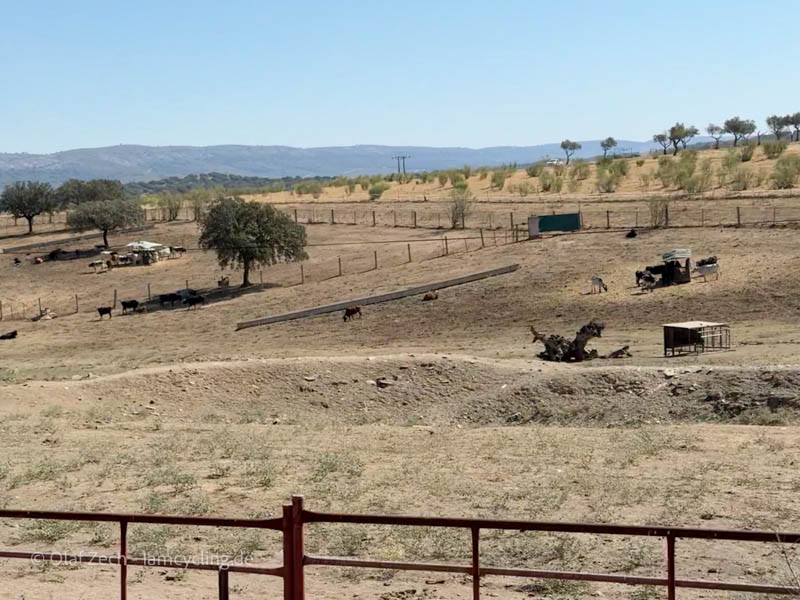
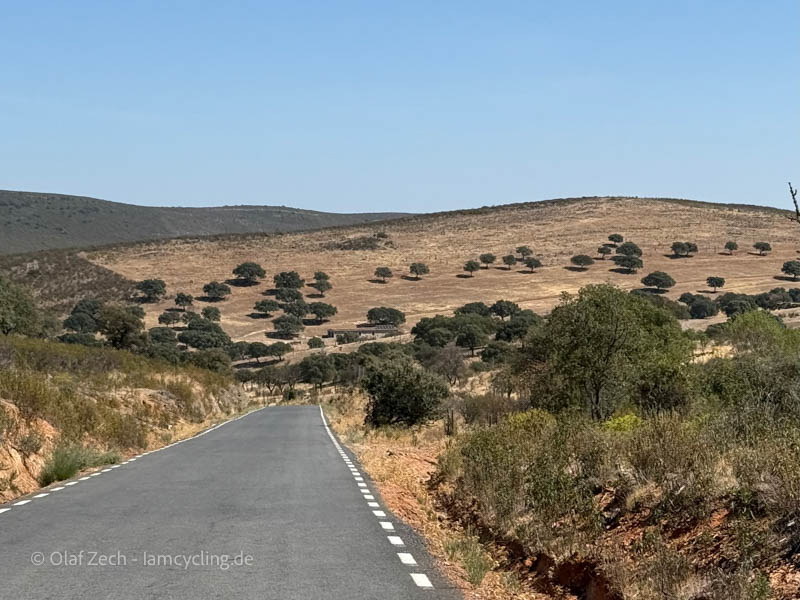
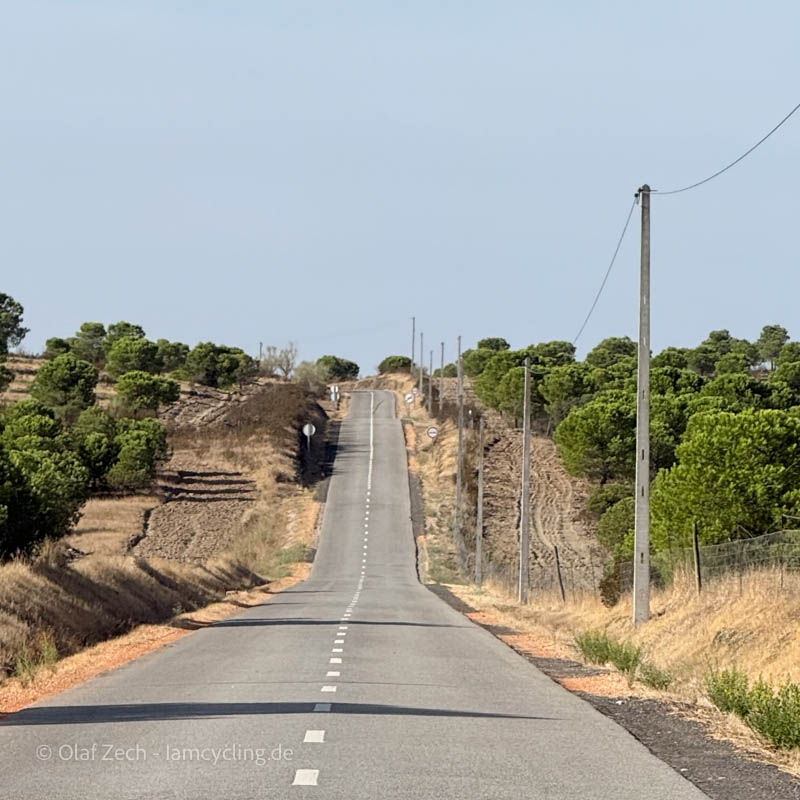
We cycled through the vast expanses of Extremadura on hot September days. The landscape was dried out, barren, and repeatedly dotted with holm oaks and cork oaks. We passed the famous Iberico pigs. Large fields of solar panels we’ve seen. We often cycled along endlessly long, straight, linely roads. Cows and, now and then, a few sheep foraged for food in the sand of the parched dehesa. Near Salamanca, we also saw fighting bulls.
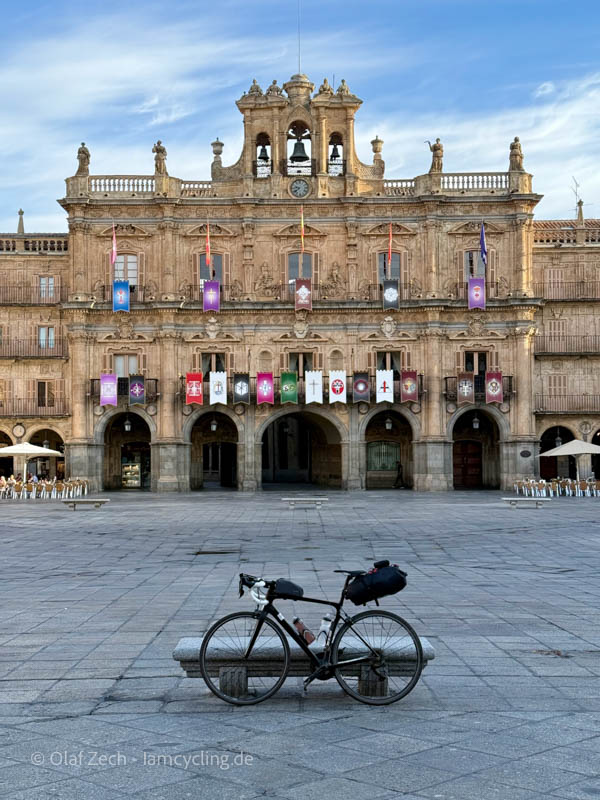
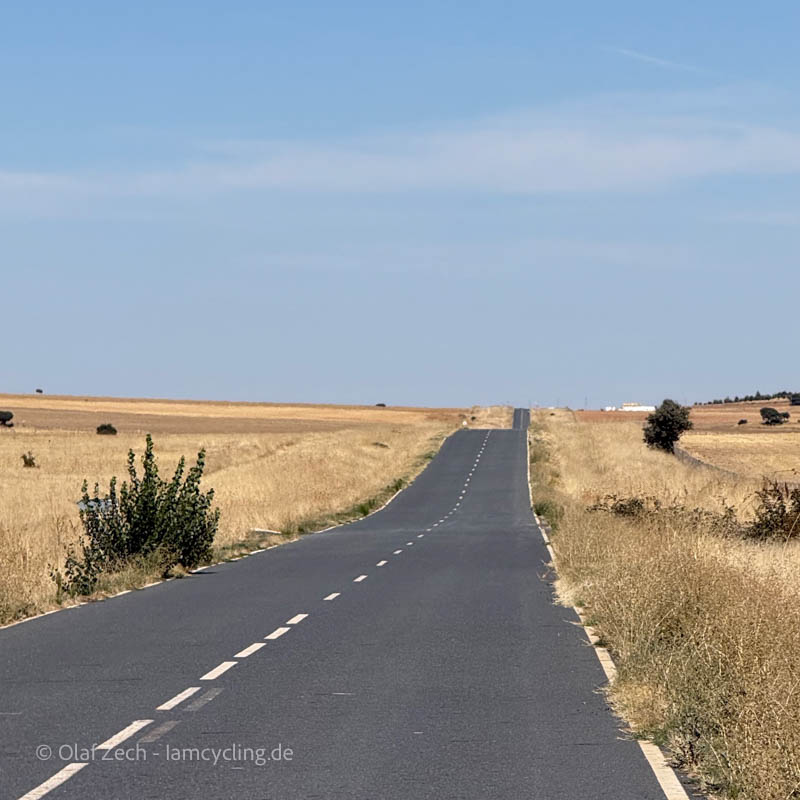
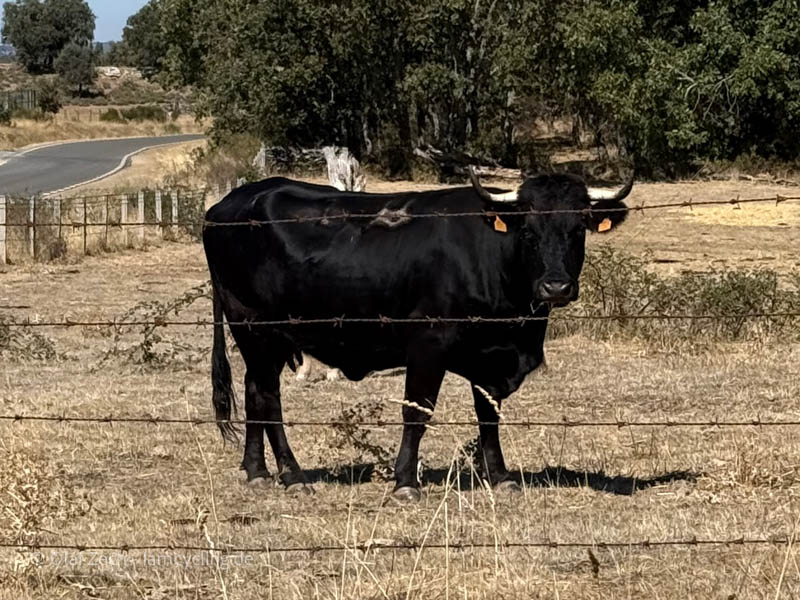
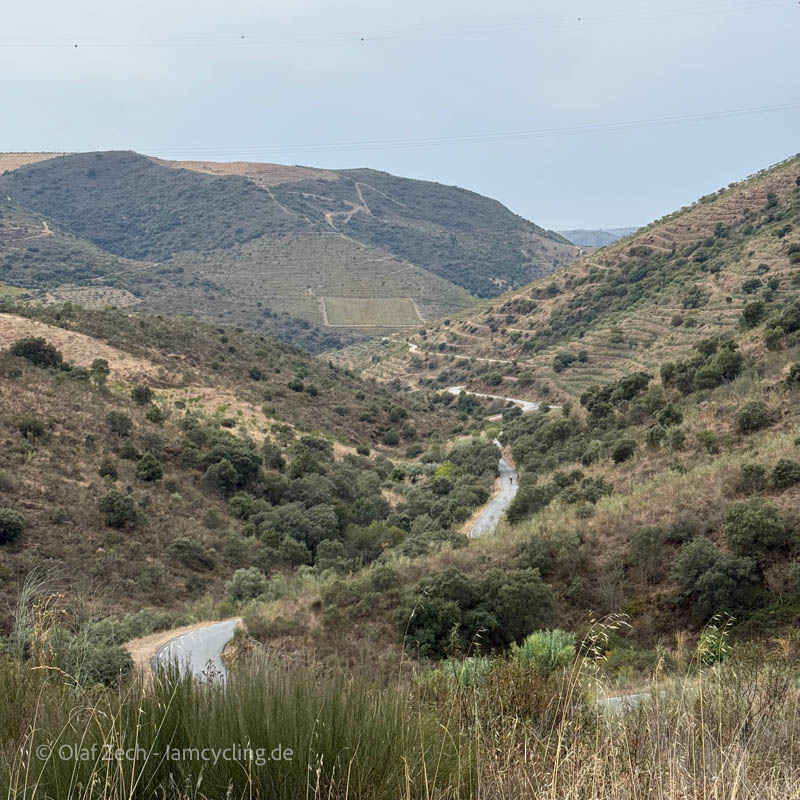
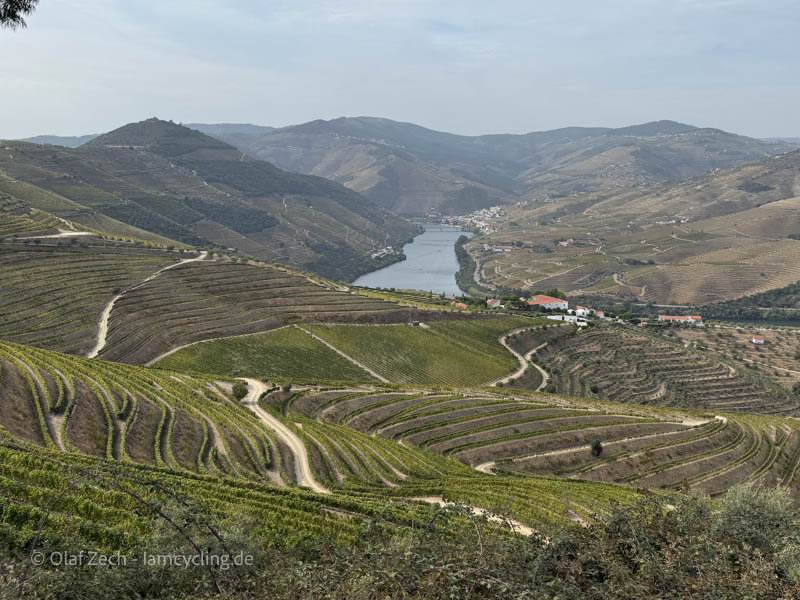
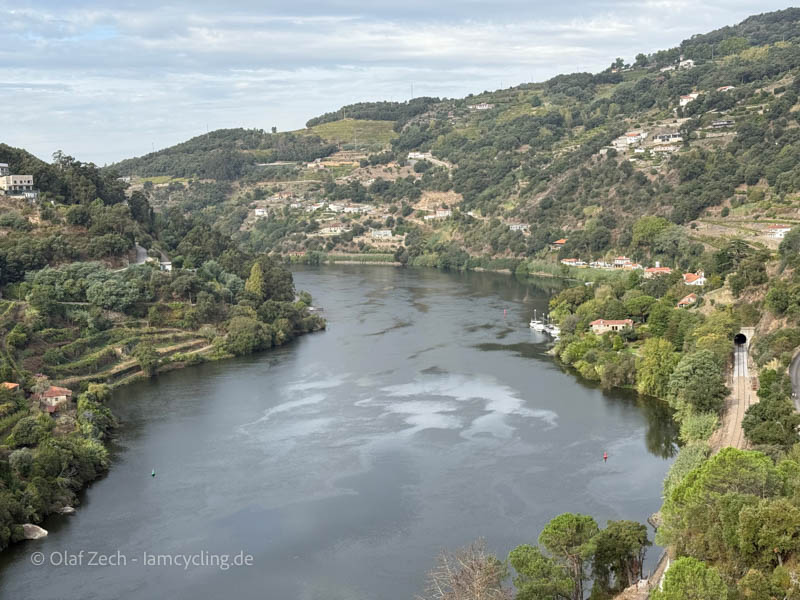
In Portugal, we cycled through the impressive Douro Valley. There were vast slopes with countless terraces where mainly grapes were grown. We cycled through large pine forests and saw both reforested and natural forests. We experienced the solitude and small villages of the Alentejo and cycled once again along endless straight roads.
Roadbike Cycling in Spain
Road bike cycling in Spain was fantastic. I don’t know of any country where you feel safer on a bike than in Spain. On top of that, new, very cyclist-friendly laws have been in effect since October 1, 2026. These laws regulate how drivers are supposed to pass cyclists and maintain a safety distance. However, there is still significant room for improvement when it comes to bike lane design in Spain as well.
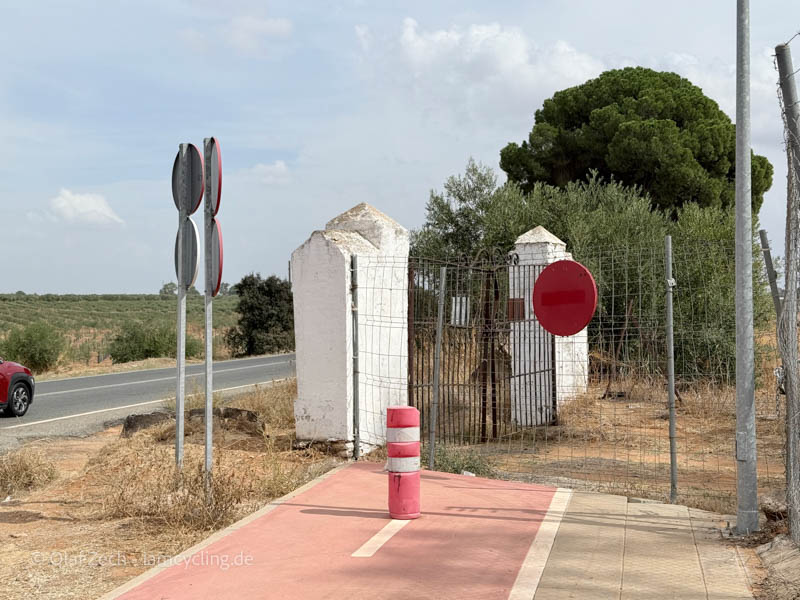
Roadbike Cycling in Portugal
In Portugal, drivers pass cyclists with less space. Still, cycling there is more pleasant than for example in Italy. It seemed to us as if there were very few cyclists in Portugal. The roads were also in worse condition than in Spain.

The prices
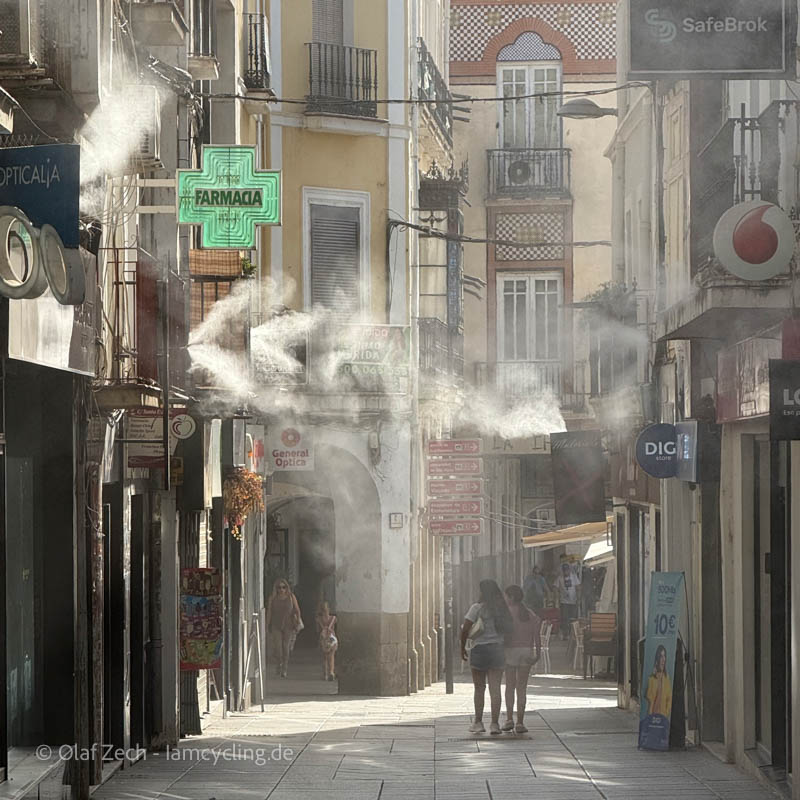
Prices were consistently reasonable and lower than in Germany. My impression was that even in the major cities like Seville, Porto, and Lisbon, prices were still reasonable.
Recommendations
The areas we cycled through were quite lonesome. You shouldn’t count on being able to buy a tube or something similar anywhere. In Portugal, in particular, bike shops are rare even in larger cities.
If you’re traveling with a friend, it’s worth thinking about booking double rooms. They’re less dreary than single rooms. In addition, we’ve found that it pays to book a room that’s a bit more expensive than the cheap options. That way, you can stay more central and breakfast is more substantial too.